

Attribution
Linear, time decay and position-based on one order
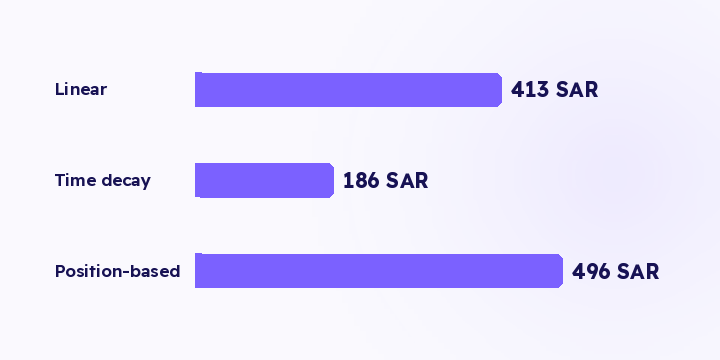
Three ways to divide credit across a journey instead of handing it to one touch. Take a single order, watch it split under each, and see which assumption fits your store.
2 min read
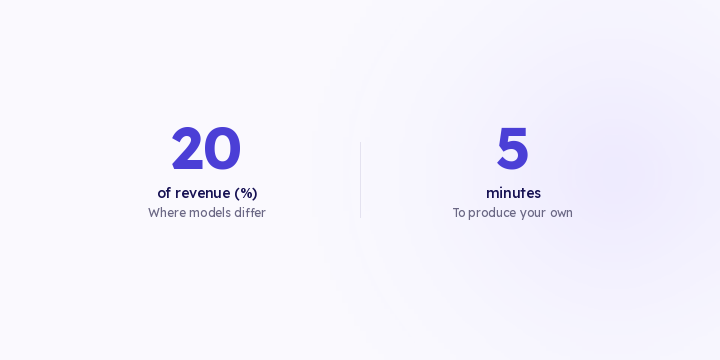
Attribution debates take up more time than any other measurement topic, and in a lot of stores they're being held about a minority of the revenue. One number tells you whether the debate applies to you at all, and it takes about five minutes to produce.
Split your recent orders into two groups: those with exactly one recorded touch, and those with two or more.
In the single-touch group, first touch, last touch, linear, time decay and position-based all produce the same result. There's one touch and it takes everything under any model.
So the model choice can only affect the second group. If that group is 20% of your revenue, you're arguing about 20% of your revenue, and a two-week discussion about it is badly priced.
The test has one condition: run it on a long window. A 7-day window mechanically turns multi-touch journeys into single-touch ones by erasing the early touches, so you'd get a share that reflects your settings rather than your customers. Flowfy stores the touch count per order inside a 90-day window, which is what makes the split readable.
Order value. More expensive purchases get longer consideration. A store averaging 2,000 SAR per order has far more multi-touch journeys than one averaging 120 SAR.
Product type. A repeat consumable is usually a single touch, because the buyer knows what they want before arriving. A first-time considered purchase rarely is.
Mostly single touch. Use last touch and stop debating. Put the effort into collection instead: making sure the one touch you do get is recorded correctly and isn't lost to a payment redirect.
A meaningful multi-touch share. Here the model matters. Read first and last together, and pick a model whose assumption you can defend. See linear, time decay and position-based.
Mixed by channel. This is the most common real answer. Paid social journeys are long, brand search journeys are short. The debate applies to some of your channels and not others, so it's more useful to read the first-versus-last gap per channel than to pick one global model.
What's a normal multi-touch share? There's no benchmark worth using. Your own number is the only one that decides.
Does a multi-touch model make my ROAS look better? No, and not worse either. It redistributes credit between channels, so some rise and some fall, and the total doesn't change.
How often should I revisit the choice? When your average order value, category mix or window changes. Not quarterly, and not because a channel looked bad this month.
For most stores the change worth making isn't a better model. It's a longer window plus resolved identity.
The window and the identity change what there is to divide. Model selection then operates on whatever survived collection. If your journeys are incomplete to begin with, switching models just redistributes the same gap differently.
Produce the share first. Then, before switching any model, write down the decision you expect to make differently afterwards, such as moving 20% of retargeting budget into prospecting. If you can't name a decision, the switch is a reporting preference, and that isn't worth breaking comparability for.
Three ways to divide credit across a journey instead of handing it to one touch. Take a single order, watch it split under each, and see which assumption fits your store.
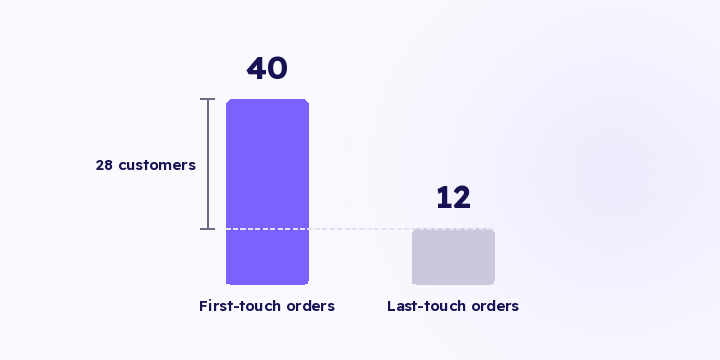
The two aren't measuring the same thing. What each one says, where each one is wrong, and how to read the difference between them per channel.
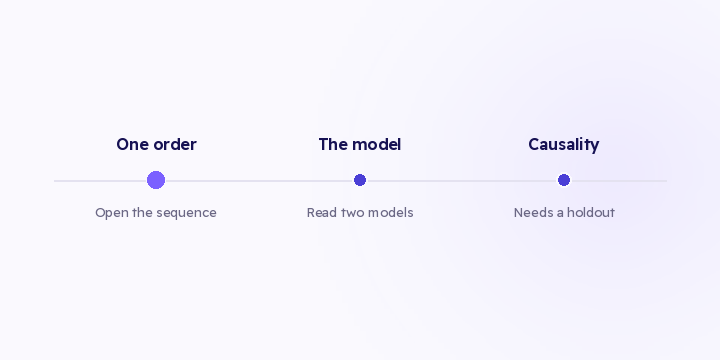
Most arguments about channel performance aren't arguments about data. Identify the type first, because only one of the three is settled by opening a record.