

Attribution
How to settle an attribution argument by opening one order
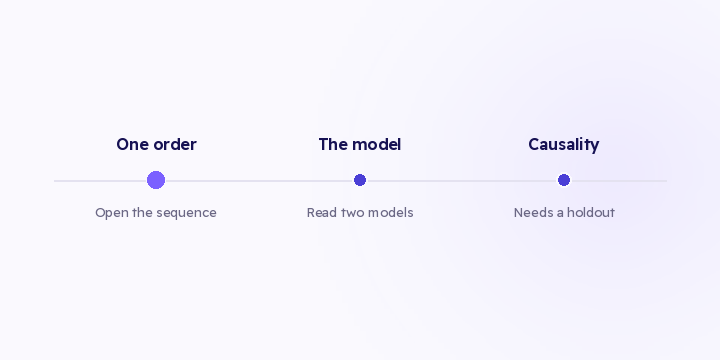
Most arguments about channel performance aren't arguments about data. Identify the type first, because only one of the three is settled by opening a record.
2 min read
Single-touch models hand all the credit to one interaction. Multi-touch models split it. The easiest way to understand the difference is to take one order and watch how it divides under each method.
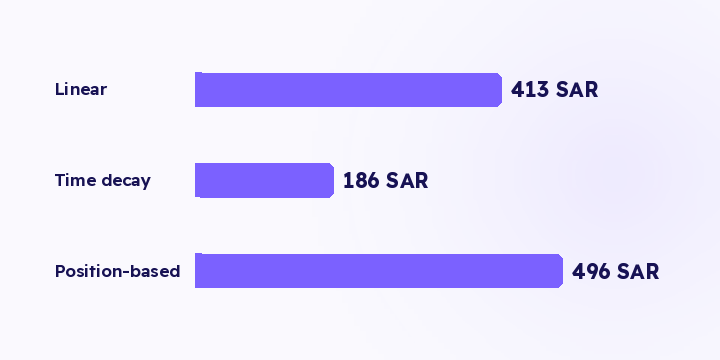
An order worth 1,240 SAR, with three touches behind it: an Instagram ad on day 1, a product search on day 3, a cart reminder email on day 6, then the purchase.
| Model | Search | ||
|---|---|---|---|
| Linear | 413 SAR | 413 SAR | 413 SAR |
| Time decay | 186 SAR | 372 SAR | 682 SAR |
| Position-based | 496 SAR | 248 SAR | 496 SAR |
Same order, same data, three distributions. The arithmetic doesn't change. What changes is the assumption behind each method.
Look at Instagram: 413 SAR, then 186, then 496. A channel whose number moves that much between models is one where you need to settle on a model before you decide anything.
Linear. Every touch takes the same share. The assumption is that you don't know which interaction mattered more, so you don't guess.
Time decay. Touches closer to the purchase take more. The assumption is that influence fades, and yesterday matters more than five weeks ago.
Position-based. The first and last touch take the majority and the rest is split across the middle. The assumption is that finding the customer and closing the sale are the hard parts, and everything between them is easier.
Linear fits when your journeys are short and similar, or when you need a number that's easy to defend in a meeting.
Time decay fits quick purchases that don't take much thinking. If your customer takes weeks to decide, this model hands the last touch nearly all the credit, because the early touches end up with a very small share.
Position-based fits stores that work hard to find the customer, and where the close is a real step rather than a formality. Notice in the table above that the email, which is a cart reminder, takes 496 SAR under position-based. If you'd call that reminder a formality, the number is telling you the model doesn't fit your case.
All three come before the model, and they're more common than a wrong model choice. In Flowfy the three models run over the same stored journeys inside a 90-day window, so you can see the difference for yourself before you commit.
Switching models doesn't raise or lower your revenue, because revenue comes from your orders. If the total moves when you switch, you have a double-counting problem rather than a model problem.
What does move is the channel ranking. Take the same month, read it under the old model and the new one, and write down which channels rose and which fell. If the budget shift you'd make is the same under both, there's nothing to change.
Most arguments about channel performance aren't arguments about data. Identify the type first, because only one of the three is settled by opening a record.
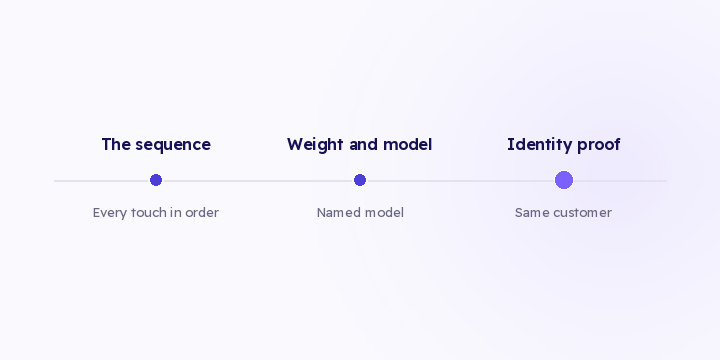
An 890 SAR order credited to a channel you didn't spend on this month. If you can't explain why, that number dies and takes every other figure from the same source with it.
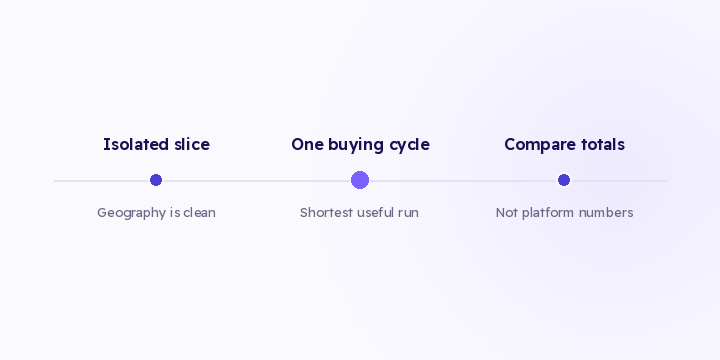
No attribution model answers this question. The only method is a holdout, and it costs real money. Here's how to design one and which channel deserves it.