
Attribution
How to find out how many orders you lose if a channel stops
No attribution model answers this question. The only method is a holdout, and it costs real money. Here's how to design one and which channel deserves it.
3 min read
"Why is this order credited to Snapchat? I'm certain it came from Instagram."
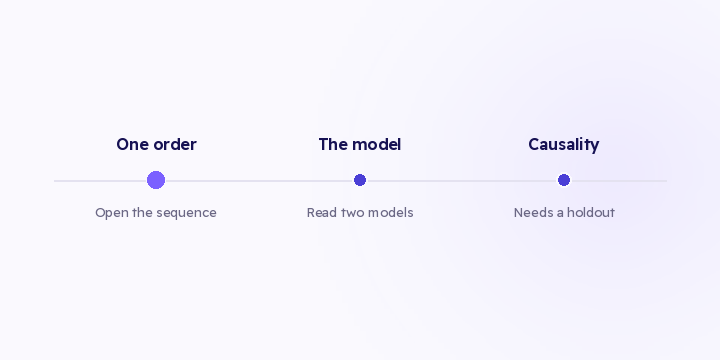
That sentence repeats in a lot of meetings and produces more reports without ever ending. The reason is that three types of disagreement look alike, and only one of them is settled by opening an order.
"That order came from Instagram." This is a dispute about a fact. You open the order and read the sequence, and it ends in two minutes without anyone having to back down. The record just says what happened.
"Last touch is unfair to our awareness spend." This isn't a dispute about data and opening an order won't settle it. Read the same period under two models side by side and the argument becomes a decision about which assumption fits your store. The comparison is in first versus last.
"That channel isn't really driving anything." No amount of attribution settles this, because attribution divides credit for what happened. It needs a holdout, and the details are in what a channel's absence costs.
The most common failure in these meetings is treating a type two or type three argument as though it were type one, and producing more reports for a disagreement no report can settle.
In Flowfy, per-order journeys with sources, timestamps and resolved identity are live and cover this procedure entirely. Reading the same period under more than one model is live too, which covers type two.
Showing per-touch weight side by side is on the roadmap. Until it ships, you infer the weights from the model you selected.
If the sequence shows an Instagram touch the model didn't credit, the disagreement was type two from the start and you've just found that out. That's a better outcome than either side winning.
If the journey is missing a touch you're sure happened, you have a collection problem rather than an attribution problem. Check whether that source was tagged and whether the session survived a payment gateway redirect.
Most type two arguments happen because two people are looking at numbers produced under different models and assuming they're comparing like with like.
Decide first who owns the model choice: one person, documented, changed rarely. If the model changes whenever someone disagrees with it, you can't compare one month to the next.
Then, in the next meeting, before anyone asks for a report, ask which type this is: one order, the model, or causation. Open the first one now, read the second under two models, and put the third on your holdout list.
And if a customer insists they came from somewhere else, they may be right about what influenced them and wrong about what they clicked. The journey records the second, not the first, and that limit is worth stating plainly rather than papering over.
No attribution model answers this question. The only method is a holdout, and it costs real money. Here's how to design one and which channel deserves it.
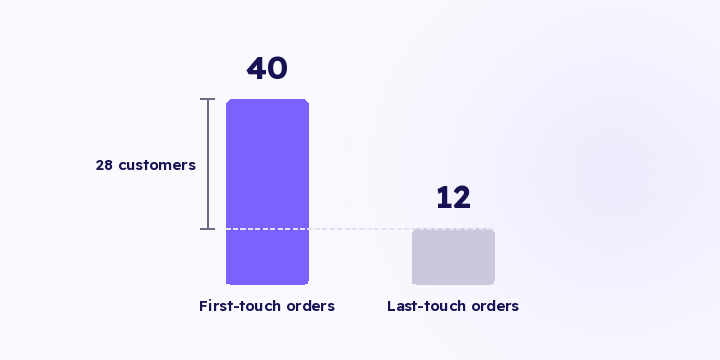
The two aren't measuring the same thing. What each one says, where each one is wrong, and how to read the difference between them per channel.
An 890 SAR order credited to a channel you didn't spend on this month. If you can't explain why, that number dies and takes every other figure from the same source with it.