


Seasons
Pick the report period from the question, not the default
Last 7 days, last 30 days, this month. All three were chosen for convenience, not for a question. Here's how to pick the range from the question you actually have.
2 min read
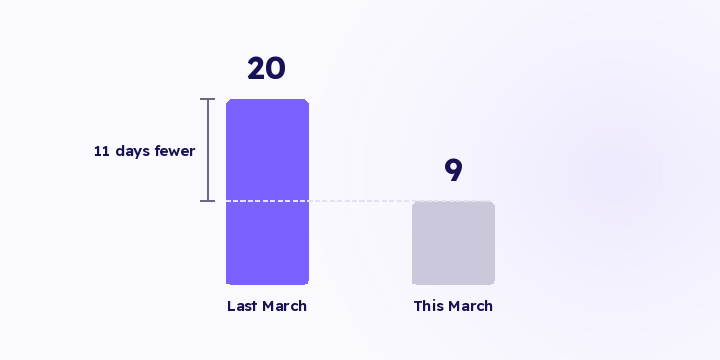
Most analytics tools compare March to March. In a market whose biggest month moves about 11 days earlier every year, that comparison can flip the sign of your result from a decline to growth.
| Ramadan days in the month | Revenue | |
|---|---|---|
| Last March | 20 | 400,000 SAR |
| This March | 9 | 310,000 SAR |
Date-aligned: (400,000 − 310,000) ÷ 400,000 = a 22% drop. Read that on a Monday morning and you'll conclude the season failed.
Season-aligned: the first nine days of Ramadan against the first nine last year, 189,000 SAR against 150,000 SAR = a 26% rise.
Same data. The difference is that the first comparison put a month containing 20 season days against a month containing 9.
The Hijri year is roughly 11 days shorter than the Gregorian one, so the drift moves in one direction. A date-aligned comparison doesn't add random noise, it adds a steady bias that reverses about every 16 years as the seasons cycle through the calendar.
For several consecutive years your March comparisons will flatter you, then for several consecutive years they'll punish you. Neither run tells you anything about your store, and both feel like a real trend.
Match the season day, not the calendar date. Day 1 of Ramadan this year against day 1 last year, for the same number of days.
Use equal-length windows. Comparing 9 days against 20 isn't a comparison. If only 9 days have passed this year, compare them against last year's first 9. A running comparison during the season is valid and useful, as long as both sides stay the same length and you update it daily.
Decide the ranges before the season starts. Decide during it and you'll pick whichever alignment flatters the number without noticing you did.
Write the ranges down somewhere fixed. Next year someone will need to reproduce the same comparison, and "last Ramadan" isn't a reproducible range.
Season alignment and saved comparisons in Flowfy are on the roadmap and haven't shipped. Today you align it yourself by selecting both ranges, day 1 to day N this year against day 1 to day N last year. It takes a minute, as long as someone remembers to do it rather than accepting the default.
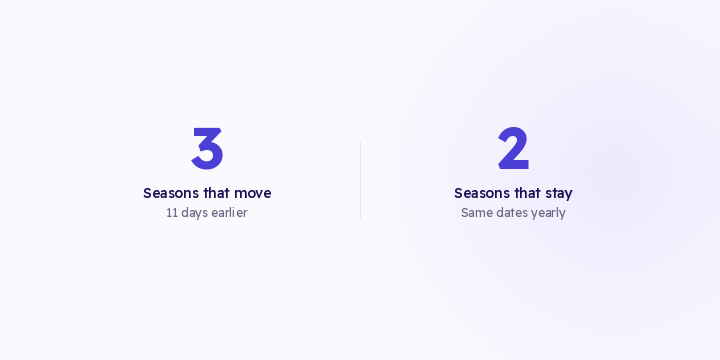
The same logic applies to Eid al-Fitr and Eid al-Adha, because they move with Ramadan. It doesn't apply to National Day or White Friday, which are fixed to the Gregorian calendar.
So a store that compares all its seasons the same way will be right about two of them and wrong about three. That mixed situation belongs in whatever document defines your reporting, because it isn't obvious and the first person to inherit those reports will get it wrong.
Fix the Ramadan dates for the last two years and write them down. Before any year-over-year read of the season, check that both sides cover the same number of days from the start of the month.
Last 7 days, last 30 days, this month. All three were chosen for convenience, not for a question. Here's how to pick the range from the question you actually have.
Every tool defaults to previous period. That default answers a different question than the one in your head. Here are the three comparisons, and which one judges performance.
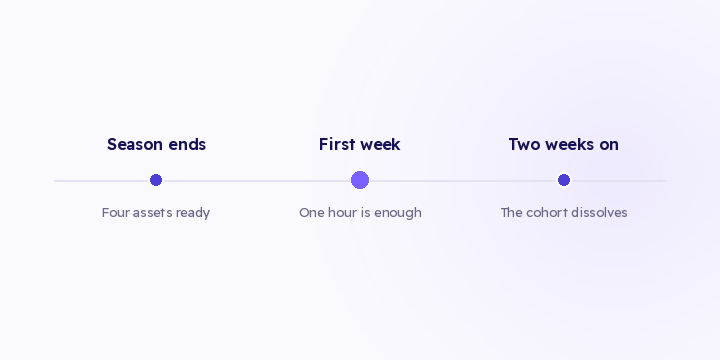
A season leaves four things behind besides revenue. All four decay within about two weeks if nobody claims them, and claiming all four is an hour of work.