

Growth
Tag every link you own, not just creator links
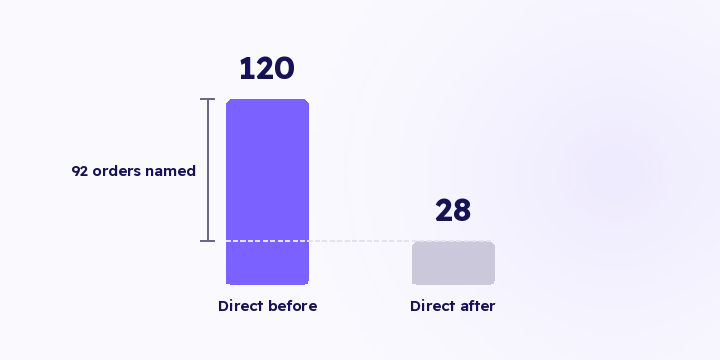
Forty per cent of one store's monthly orders sat in direct. Tagging three links it already owned put a name on 92 of them, and nothing about the marketing changed.
2 min read
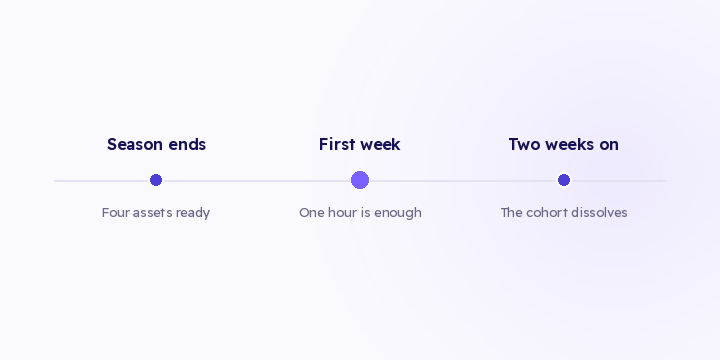
The final readout gets all the attention because it produces a number. But a season leaves four other things behind, and each one decays quietly if nobody touches it in the first fortnight. Revenue banks itself. These don't.
The largest single output of a season is a group of first-time customers who all arrived within a few weeks of each other.
That's the cleanest cohort you'll get all year: same entry period, same offer conditions, acquisition costs you can actually compare. It's the group that answers the question deciding next year's budget, which is whether season customers come back.
What to do now: record who they are, which channel acquired each one, and set a reminder for 30 and 60 days out. That's minutes of work.
Skip it and the cohort blends into your general customer base within a month, and the question stops being answerable.
You've just acquired a large number of buyers, and every one of them should come out of acquisition targeting immediately.
This is the cheapest post-season win available and the most commonly missed, because attention moves on the moment the season ends. Meanwhile your campaigns keep running against an audience that now holds a month's worth of people who already bought.
Do it in the first week, not six weeks later when somebody notices cost per order climbing.
Seasons force you to tag things: creator links, WhatsApp broadcasts, packaging inserts, partner placements. Whatever you tagged for the season now has real numbers attached to it.
Leave the tags in place. The most common waste is treating seasonal tagging as seasonal, so the tags get removed in a cleanup and the same sources collapse back into direct for the rest of the year. See tag every link you own.
Every season produces at least one measurement failure. The useful part isn't the failure, it's how many days it took to notice, because that number applies again next season at higher spend.
Write it down while it's fresh: what broke and how it was found, how long it took to notice, and what would have found it sooner. Nobody remembers this eleven months later, and everybody assumes they will.
All four decay. The cohort blends in, the exclusion window closes, the tags get cleaned up, and the failure list fades out of memory. None of it needs analysis. It needs one person spending an hour while attention is still on the season.
In Flowfy, identity resolution, order-level source and audience building with export are live today, so the cohort is identifiable, the exclusion audience is buildable and exportable, and tagged sources stay attached to orders. Cohort retention curves are on the roadmap and haven't shipped, so the 30- and 60-day return rate is produced by exporting the cohort and re-checking it later. That works, and it's exactly the kind of scheduled manual step that stops happening.
How long should I track a season cohort? Through at least two repeat cycles. For most stores that's 60 to 90 days.
Does a season cohort represent my other customers? It represents season acquisition. Don't generalise its behaviour to customers who arrived in an ordinary month at full price.
What if the cohort doesn't come back? Then the season bought transactions rather than customers, and you want to know that before planning the next one at the same discount depth.
Should I keep the seasonal creative? Keep the lesson, not the file. What worked in a season often worked because of the season.
Book an hour in the week after the season: export the cohort with each customer's channel, build the exclusion audience, and write the three lines on what broke.
Forty per cent of one store's monthly orders sat in direct. Tagging three links it already owned put a name on 92 of them, and nothing about the marketing changed.
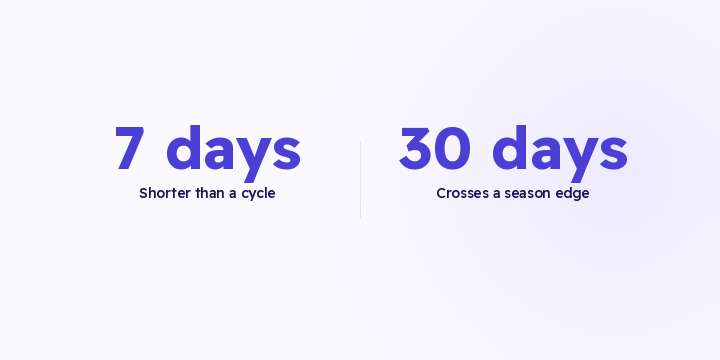
Last 7 days, last 30 days, this month. All three were chosen for convenience, not for a question. Here's how to pick the range from the question you actually have.
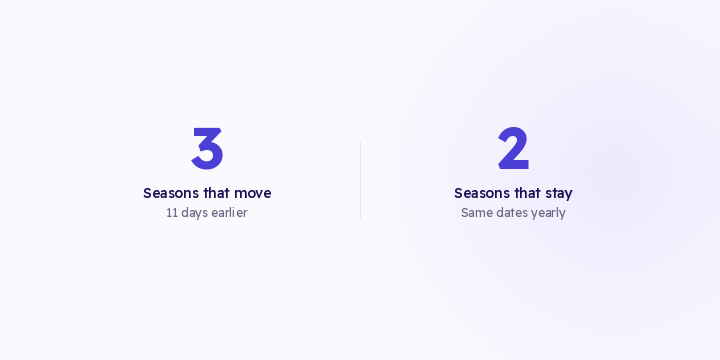
Every tool defaults to previous period. That default answers a different question than the one in your head. Here are the three comparisons, and which one judges performance.