Offline touchpoints cost you money and have no revenue line facing them. One code on something you already print turns them into a channel you can compare against paid.
Every store has touchpoints that exist in the physical world, which is why they never appear in any report. They aren't small and they aren't free, and their orders land in direct.
A card in the box with a code costs 0.60 SAR per parcel. Across 2,000 parcels that's 1,200 SAR sitting in a printing budget with no revenue line facing it.
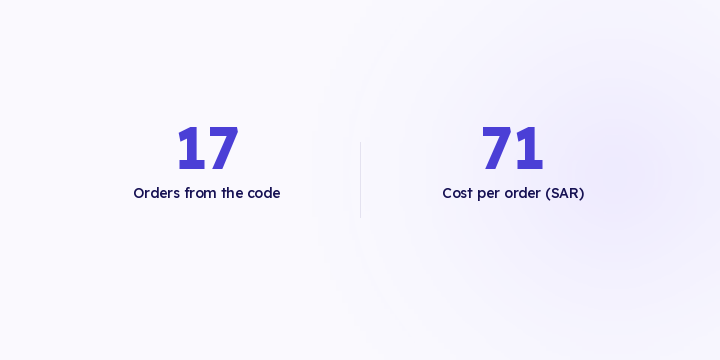
Put a tagged code on it and it produces 17 orders at roughly 71 SAR each, which is a figure you can compare directly against your paid channels. Before tagging, those 17 orders were credited to direct and the card looked like pure cost.
The same applies to the parcel itself if you print a short link or QR on the label. It also applies to receipts, business cards, event material, and anything a partner hands to a customer physically.
The volume is usually modest. Three things make it worth the effort anyway.
It costs you nothing extra. You're printing the thing already, and the code doesn't add to the print bill.
It reaches someone who has already bought. A packaging insert lands with a customer who just received an order, which makes it a retention channel at a fraction of retargeting cost.
There's no auction. No competitor bidding against you, no platform taking a share.
One code per placement, not one code for everything. An insert and a receipt are different placements with different behaviour.
A short link behind the QR so you can change the destination without reprinting. This is the step people forget: a QR printed straight to a destination URL can't be edited once it's printed.
Parameters consistent with your online tagging convention, so the source shows up in the same report rather than a special one.
Date or batch the code if you print in runs. Otherwise you can't tell this quarter's insert from the last one.
Then read the code's orders, not its scans. A scan isn't an order, and judging by scans makes the channel look stronger than it is, the same way discount codes do with influencer performance.
In Flowfy, capturing a tagged link's source and holding it on the order is live today, including across payment redirects and for the length of the 90-day window, which is what makes an offline code measurable at all. A link builder that generates and manages codes, and QR generation, are on the roadmap and haven't shipped. Today you create the short link and the QR with any tool and tag the destination.
Do people actually scan QR codes?
In this market, usage is high. But measure it rather than assuming, which is the point of tagging it.
Should the insert offer a discount?
A discount raises scans and lowers margin, and it makes the channel's economics harder to read. Try it without one first, so you have a baseline.
How do I attribute a purchase from a printed code weeks later?
The source is held on the order inside the attribution window, so a delayed purchase still traces back. See the 90-day window.
Is it worth it at low volume?
The cost is near zero, so the threshold is low. Seventeen orders at 71 SAR is worth more than the weakest campaign in a lot of accounts.
Take the placement you print most of, usually the parcel itself, and put a tagged code on the next run. A month later, divide the run's cost by its orders and compare the number against your paid channels.
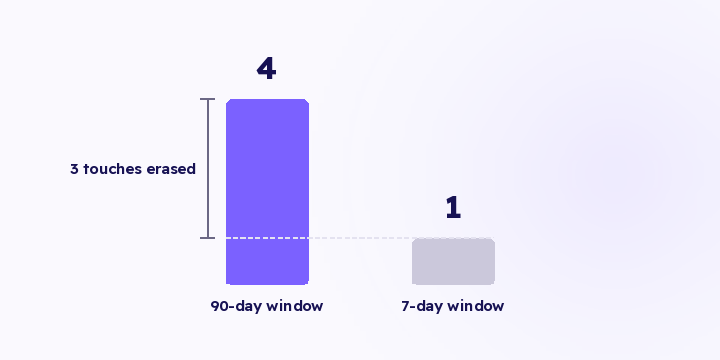
A model can only divide the touches it can see. Before arguing about first versus last, check how far back your window reaches, because a short one erases the whole subject of the argument.
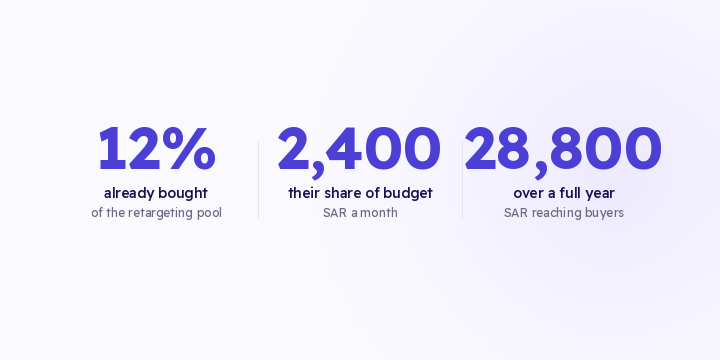
12% of a retargeting audience has already bought, and their share of the budget is 2,400 SAR a month. The waste never shows up as a loss anywhere, which is why it runs for years. Here's the arithmetic and the exclusions to run.
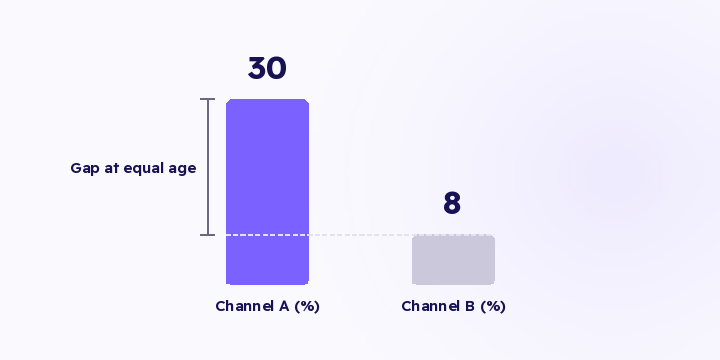
A blended repeat rate mixes a customer of three weeks with a customer of two years. Grouping people by when they arrived turns a static number into a curve you can act on. Here's the idea and three objections to it.