

Attribution
First touch and last touch, what each one answers
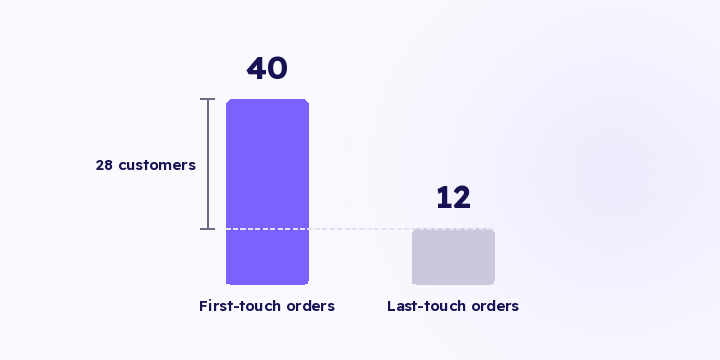
The two aren't measuring the same thing. What each one says, where each one is wrong, and how to read the difference between them per channel.
3 min read
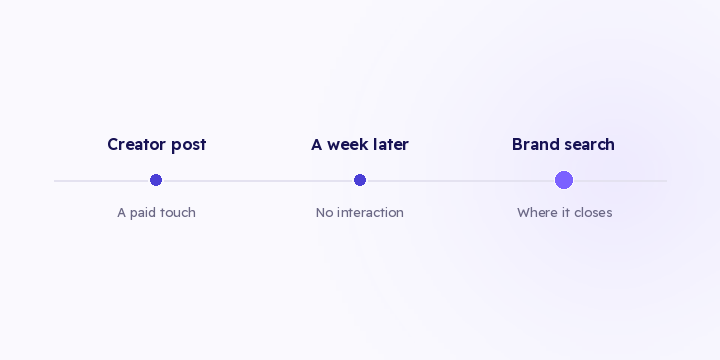
Someone sees a creator post, thinks about it for a week, then searches your store name and buys. Who gets the credit?
Last touch says brand search. Last paid touch says the creator link. Both have a case, and both lead you to a wrong decision if you use them on their own.
Under last touch, every order that closes on brand search, a direct visit or an email to an existing customer is credited to organic.
The result is that advertising looks weaker than it is, especially in categories with longer consideration cycles. And it gets worse as your brand grows: the stronger your name, the more orders close on brand search, and the more your ads appear to be failing.
Stores in that position cut awareness spend, watch brand search decline a month later, and never connect the two.
The correction overshoots. Under last paid touch, an order goes to whichever paid interaction came last, even when the buyer was a repeat customer who'd have come back anyway.
That makes retargeting look extraordinary. It sits next to the purchase, it's paid, and it's the last paid thing in most journeys. A store optimising on last paid touch will keep scaling retargeting until it's buying customers it already had, which is the exclusion audience problem in another form.
Before you judge, look at the shape of the journey itself:
| Pattern in the journey | Reading |
|---|---|
| Paid touch, then organic close, first-time buyer | Paid created this demand |
| Organic touches only, repeat buyer | Organic and retention, no paid claim |
| Paid touch after organic touches, repeat buyer | Retargeting harvesting existing demand |
| Paid first touch, long gap, organic close | Paid opened it, and the gap is the evidence |
The last row is the one both models get wrong in opposite directions, and it's the most common shape in stores running awareness campaigns.
The question isn't which model is right. It's this: if that channel disappeared tomorrow, what would happen to your total orders?
Attribution can't answer it. A holdout can: pause the channel in one region or for one audience, and read total revenue rather than attributed revenue. Holdouts run in the ad platforms and aren't a Flowfy feature. What Flowfy provides is the total-order number the test gets judged against, measured on your side rather than by the platform running it, with new-versus-returning status carried on each order.
Read one month under first touch and last touch, then split the result by new and returning. Any channel that looks strong but whose buyers are mostly repeat customers, don't raise its budget before running a small holdout on it.
The two aren't measuring the same thing. What each one says, where each one is wrong, and how to read the difference between them per channel.
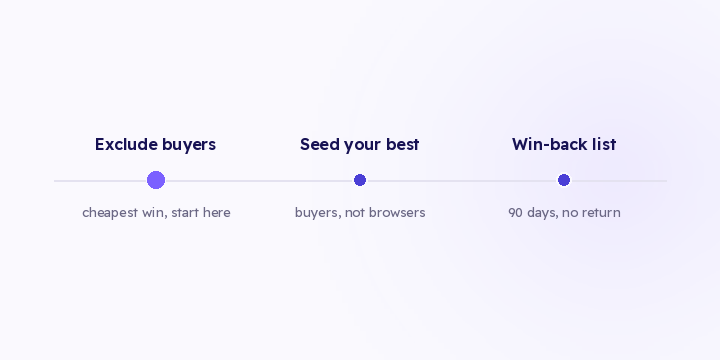
A platform pixel only knows browsing inside that platform. Your store knows who bought, what they spent and which channel brought them. Here are three lists worth building, and how to keep them from going stale.
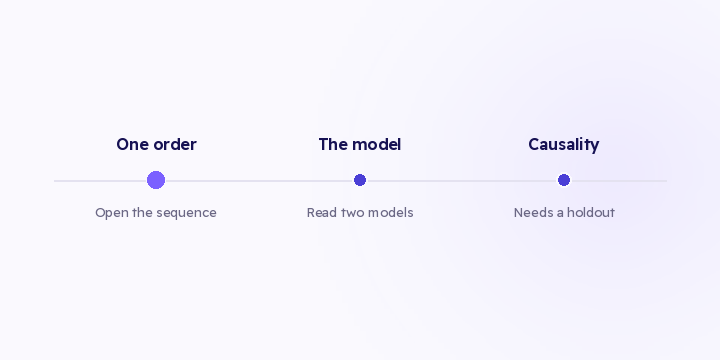
Most arguments about channel performance aren't arguments about data. Identify the type first, because only one of the three is settled by opening a record.