White Friday doesn't create tracking failures. It exposes the ones you already have, while you spend four times normal. Here's the pre-season check schedule and the two minutes to run daily during it.
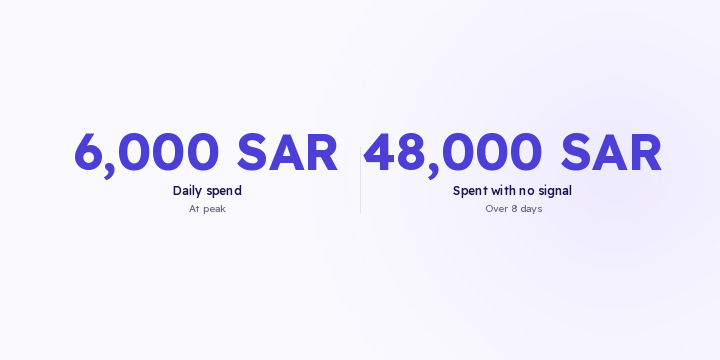
The campaign keeps running and the spend keeps going out, but the platform receives no purchase events from that destination for eight days. So the algorithm optimises on visits and clicks instead of buyers.
The cost doesn't stop at 48,000 SAR either. The whole learning phase was built on a partial signal, so performance stays degraded after the fix while the platform relearns.
What makes it hard is how quiet it is. No error in your store, no notice from the platform. Events come back rejected and nobody tells you.
Four weeks out: credentials. Open every destination and run a real test call that returns a pass or a fail with a named cause. Tokens don't announce their expiry, and the ones that expire during a season were usually issued around the same time last year.
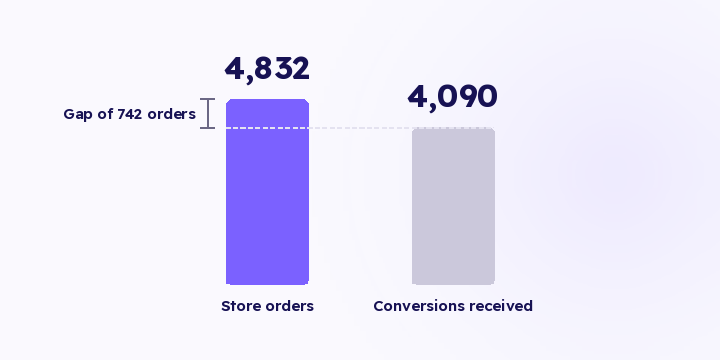
Three weeks out: the gap. Compare a full month of store orders against delivered conversions per destination. A gap you can live with in an ordinary month becomes the largest line item in your season.
If the gap is large, where it sits tells you what caused it. One destination short while the rest look fine points at mapping or credentials on that destination. All destinations short by roughly the same proportion points at collection itself, and usually at the browser side.
Two weeks out: one event, end to end. Open your store in one tab and the live events view in another, and walk a purchase all the way through. Confirm each destination received it, under its standard name, with a value attached. Credential validation on save, the live events view and the delivered log with each platform's response are live in Flowfy today, and they cover these three checks.
One week out: the comparison baseline. Decide which comparison you'll judge by before the season starts: the same season last year, aligned by season day rather than calendar date. Decide it once you're inside the season and you'll pick whichever comparison flatters the result. Season shading and saved period comparisons are on the roadmap and haven't shipped, so today you select both ranges yourself and note which ones you used. If your promotional depth this year differs from last year's, treat the comparison as direction only. More on that in measuring a Saudi season.
During: daily, not weekly. Revenue by source, and delivered conversions per destination. Two minutes, once a day. Hourly detectors that would catch a mid-season break without you looking are on the roadmap and haven't shipped, so the manual check is the current substitute, covered in tracking health.
Finding a broken token on 27 November costs you the season. Finding it two weeks earlier costs you minutes.
The check itself costs nothing, and the failure it prevents scales with your daily spend. Your daily spend peaks exactly when you're least likely to be looking closely.
In practice that means an hour spent on credentials a month out returns more than two days spent on targeting and creative during the season. Not because campaign work doesn't pay, but because campaign work improves things by a percentage while a failure stops the signal entirely.
An expired credential. The most common, and the most expensive.
A theme changed for the season. A seasonal landing page or a redesigned product template drops browser events, and nobody connects the two. If a seasonal design is unavoidable, ship it four weeks out, not four days.
A destination added in a hurry. Mapped by hand, under the wrong event name, counting nothing.
All three are caught by the same two-minute check, and all three surface late if you wait for weekly reports.
Open your calendar and put in two dates: a credential check four weeks before the season, and a full test purchase two weeks before. And don't change tracking configuration in the final fortnight, because that's how stores create the problem they were preparing to avoid.
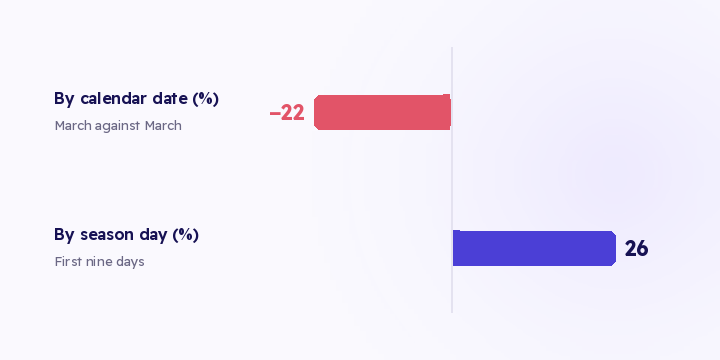
Ramadan moves about eleven days earlier each Gregorian year. The same data reads as a 22% drop by calendar and 26% growth by season day. Here's how to align it, and what to check during the month.
Tracking rarely fails in a way you can see. A theme update or a lapsed permission, and the numbers drift down and read as a slow week. Here's what to compare, how often, and how to tell when a gap is worth acting on.
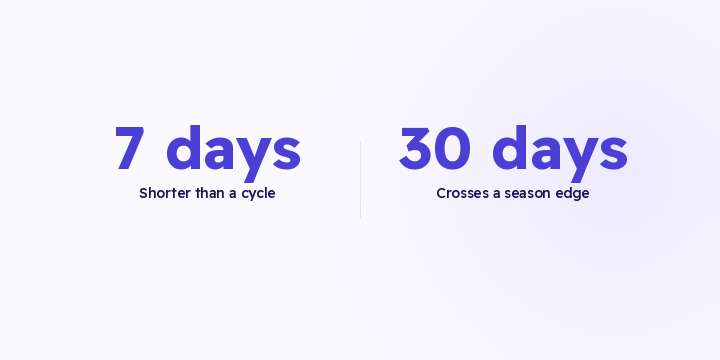
Last 7 days, last 30 days, this month. All three were chosen for convenience, not for a question. Here's how to pick the range from the question you actually have.