Say "customer journey" and most people picture a diagram: awareness, consideration, purchase, retention. That diagram is a model of buying in general. It tells you nothing about any customer you actually have.
The useful thing is much narrower: this specific customer, what they did, in order, with dates and sources attached.
For one customer:
- Every visit with its source: channel, campaign, ad set, ad
- The timestamp of each visit, so the gaps between them are visible
- Every order, its value, and where it sits in the sequence
- The identifiers that tied the record together, so you can check the merge yourself
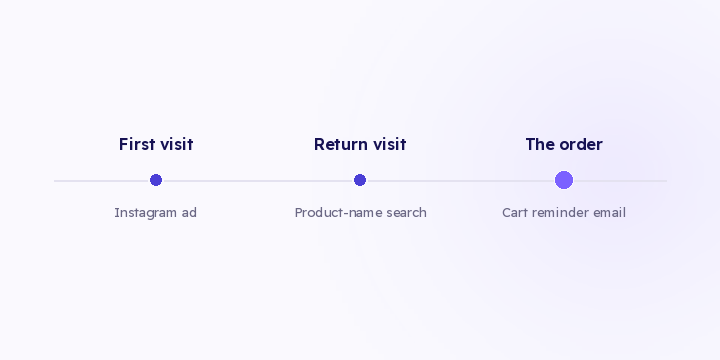
Read as a list, one journey looks like this:
| Day | Event | Source |
|---|
| 1 | First visit | Instagram ad, prospecting campaign |
| 3 | Return visit | Search on product name |
| 6 | Cart, then order at 1,240 SAR | Email, cart reminder |
Three lines answer more questions than a month of aggregate reporting, because every claim about this order is now something you can open and check.
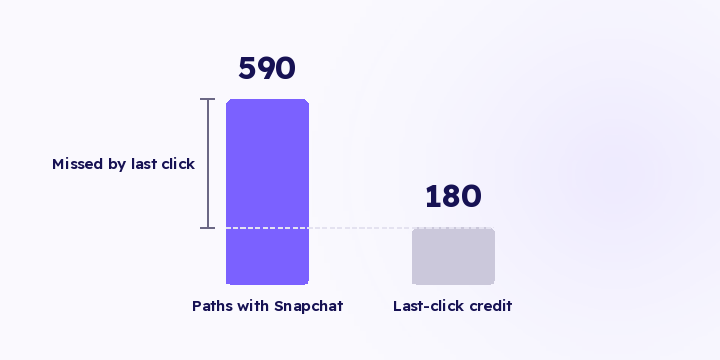
A channel table can tell you Snapchat was present in 590 orders. It can't tell you Snapchat was the first touch in 410 of them.
That difference changes the decision. A channel that shows up early is doing discovery, so judging it on close rate is the wrong test. A channel that shows up late is harvesting journeys someone else opened, and scaling it won't grow the store.
Why this order was credited to this channel. Open the customer and read the sequence. The answer stops being an opinion and becomes a record. More on that in explaining attribution.
What a campaign actually did. For a campaign that's rarely the last touch, compare how many orders it closed against how many orders it appears in anywhere. A wide gap means it opens journeys others close, and that's the campaign most likely to get cut on a last-click report.
How long people take to decide. The gap between first touch and order, per customer. That's what tells you whether your attribution window is long enough.
Two things, both upstream of attribution:
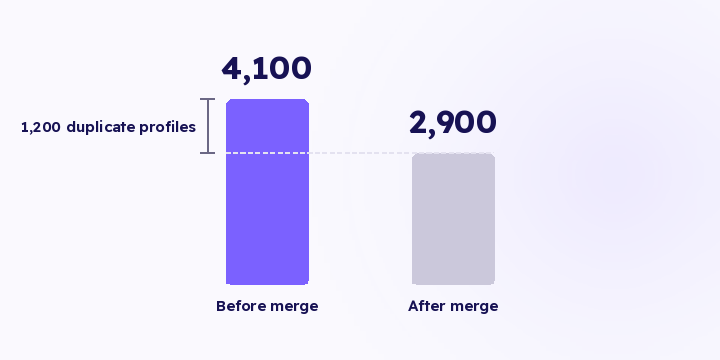
- Split identity. If one person shows up as three profiles, you have three fragments and no journey. That's why identity resolution comes first.
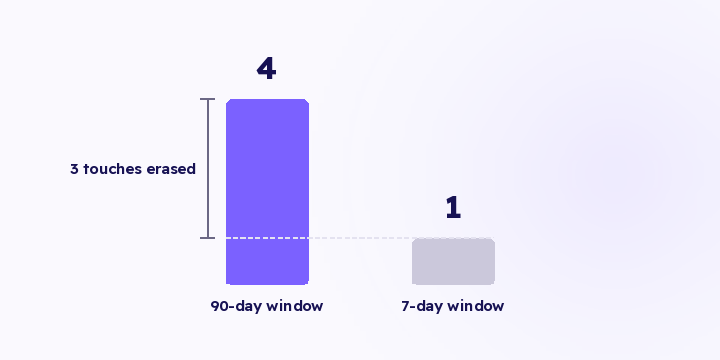
- A short window. Touches older than the window never enter the sequence, so a long journey arrives looking short. See the 90-day window.
Both produce the same symptom: journeys shorter and simpler than reality. Then you conclude attribution modelling doesn't matter for your store, on the basis of data that was already incomplete.
Full touchpoint journeys are live in Flowfy today: the ordered sequence per customer with sources and timestamps, over a 90-day window, against an identity resolved from fourteen identifier types, with anonymous history backfilled the moment someone identifies themselves.
Does the customer need an account?
No. The purchase itself carries enough to resolve identity: email, phone and order ID.
How many touches are in one journey?
Four to five is common in this market, but yours is the only number that matters, and the same record gives it to you.
Does it include visits that produced no order?
Yes. Those visits are where you see consideration. Drop them and every journey looks like a single decisive click.
Take the last order whose source you argued about and open its record. If journeys look shorter than you'd expect across most orders, check identity and window before you discuss models at all.