

Growth
What the second purchase journey looks like
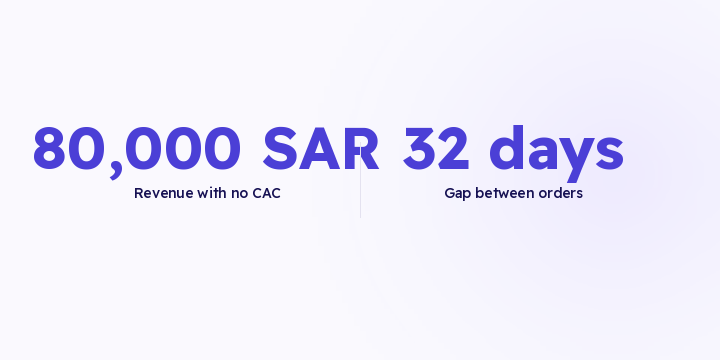
The second order has its own journey and its own channels, and it's the cheapest revenue you have. Here's the arithmetic, and the time gap that decides when to act.
3 min read
You've got a campaign with a poor return in the dashboard, and the first instinct is to pause it.
So you pause it, and a few weeks later total revenue drops by more than that campaign was ever credited with. That's an assist campaign: it takes part in many journeys and closes few of them. Your default report has no way of showing you that role.
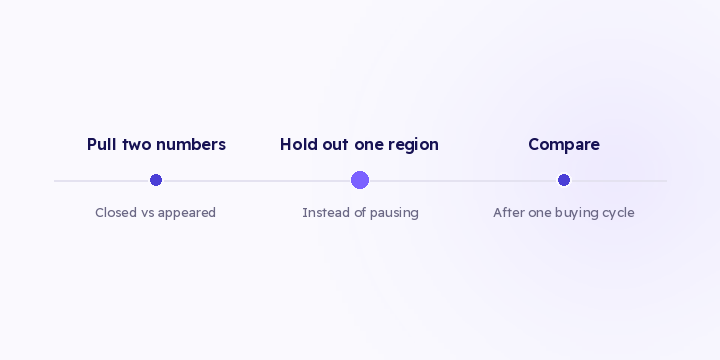
For each campaign, pull two numbers over the same period:
A campaign with a wide gap between those two is an assist. You don't need a new attribution model for this, just stored journeys and the ability to ask both questions of one period.
There's no ready threshold that says the gap is wide enough. Rank your campaigns by the ratio between the two numbers and look at the top of the list; the pattern is usually clear.
In Flowfy, touchpoint journeys, first-touch versus last-touch comparison and conversion paths with their order preserved are live over a 90-day window, so you can run this test today. A screen that ranks campaigns by assisted contribution is a different matter: the data behind it is stored and queryable, but the summarised view is on the roadmap and hasn't shipped.
Under last touch, an assist shows a weak return, because closing isn't its job. The number isn't wrong. It answers a question about closing, and this campaign doesn't close.
What follows is predictable. The campaign is paused, and two to six weeks later total revenue falls by more than its entire attributed contribution. By then the pause is old news, so the decline gets blamed on seasonality, competitors or creative fatigue. That delay is why the same decision gets made again the following quarter.
Its return is poor, so why fund it? Because you're measuring it with a closer's ruler. Judge it on first touch and on the number of orders it took part in. If you can, give it a separate budget line, because an assist competing against a closer for the same line loses every review.
Let's pause it and see what happens. A full pause gives you a decline with no control group, and you won't know the cause. Hold it out in one region instead and compare that region against another. A holdout also separates an assist from waste, and no report tells those apart. More in what a channel's absence costs.
We watched it for a week and nothing changed. A week is shorter than the buying cycle in most stores. Check the gap between the two numbers over a full cycle, from first touch to order.
A customer who bought once comes back weeks later. Between the two orders sit touches: an email, a retargeting impression, a creator post they saw again, a packaging insert that arrived with the first order.
The second purchase gets credited to whatever closed it, usually direct or brand search, and the touches that brought the customer back get nothing. That's why the repeat journey deserves a separate reading, covered in repeat purchase journeys. A campaign that shows up often in repeat journeys belongs with your retention campaigns, not your acquisition ones.
The second order has its own journey and its own channels, and it's the cheapest revenue you have. Here's the arithmetic, and the time gap that decides when to act.
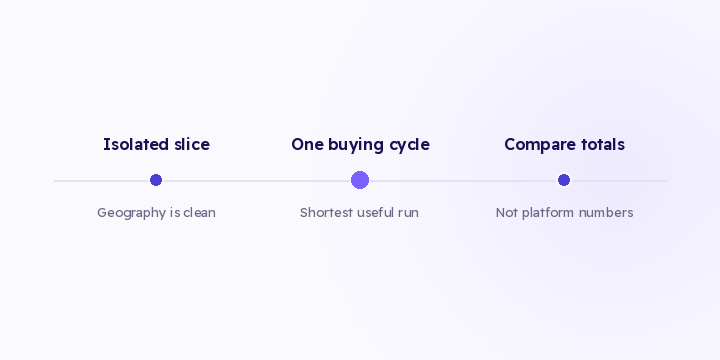
No attribution model answers this question. The only method is a holdout, and it costs real money. Here's how to design one and which channel deserves it.
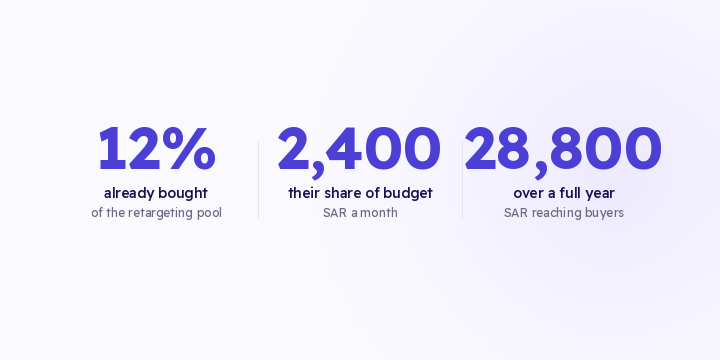
12% of a retargeting audience has already bought, and their share of the budget is 2,400 SAR a month. The waste never shows up as a loss anywhere, which is why it runs for years. Here's the arithmetic and the exclusions to run.