

Tracking
Six ways tracking breaks, and how to check each one
Tracking doesn't fail in unlimited ways. It fails in about six, and each one has a fingerprint. Here are the six, and the check to run if you only have time for one.
3 min read
Alerting is a year-round topic that turns urgent for about six weeks a year. During a season, the value of an alert is set by one thing: how much you spend while it stays quiet.
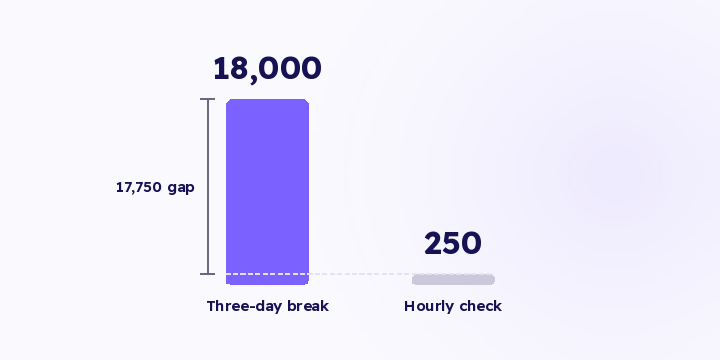
A store spends 6,000 SAR a day through peak. Tracking breaks one evening and nobody notices for three days.
Worth being precise: the orders aren't lost. Your store recorded every one and the money came in. What's lost is the signal going back to the platform, which is what optimisation learns from and builds its targeting on.
With an hourly check, the same failure exposes you to 6,000 ÷ 24 ≈ 250 SAR instead of 18,000. An alert doesn't prevent failures. It shortens the period you spend paying without seeing.
Purchase flatline. Zero completed-order events for longer than your longest normal quiet period. In Ramadan the normal quiet period is the daytime lull, not the small hours, which is exactly why a threshold set in February misfires all month. See why fixed thresholds fail.
Store-to-platform gap. Your order count against conversions delivered per destination, diverging past a set point. That's the one that catches a single destination going quiet while the rest keep working.
Pace against target. This isn't a failure detector, it's a commercial one. If your required daily rate has drifted away from your actual rate, you want to know on day twenty, not day twenty-nine.
Everything else. During a season an alert you don't act on is worse than no alert, because the first unhelpful notification you tolerate leads to the fifth, and then someone mutes the channel and every detector behind it stops mattering.
Specifically leave off creative fatigue warnings, minor budget-pacing notices and small day-over-day variance alerts. All are reasonable in an ordinary month and all are noise in a season, where variance is high anyway.
The substitute is a deliberate daily check at a fixed hour, in the evening during Ramadan:
Two minutes, and it turns a three-day exposure into a one-day exposure.
In Flowfy, the delivered log with per-event platform responses, revenue by source and conversions delivered per destination are live today, and that's what the manual check reads. Automated detectors, thresholds you set yourself and goal pace alerts haven't shipped. Until they do, the check above is the whole alerting strategy, and it's worth putting on a named person's calendar.
How fast would I notice a break without alerting? When someone next opens the dashboard. That's why a fixed daily time matters more than the check itself.
Does a gap mean something is broken? No. Some gap is normal: blocking browsers, excluded bots, events outside the window. What matters is the gap changing, not the gap existing.
Should I check more than once a day during the final ten? Twice a day is reasonable when daily spend is at its annual peak. Beyond that you're watching rather than working.
What do I check first when an alert fires? Credentials, then event mapping. Those two explain most silent failures, and there's detail in six checks that find a break before you do.
Put the two-minute check at a fixed evening hour and turn on two detectors only: purchase flatline, and the gap between your store and your destinations. The rest can wait until the season ends.
Tracking doesn't fail in unlimited ways. It fails in about six, and each one has a fingerprint. Here are the six, and the check to run if you only have time for one.
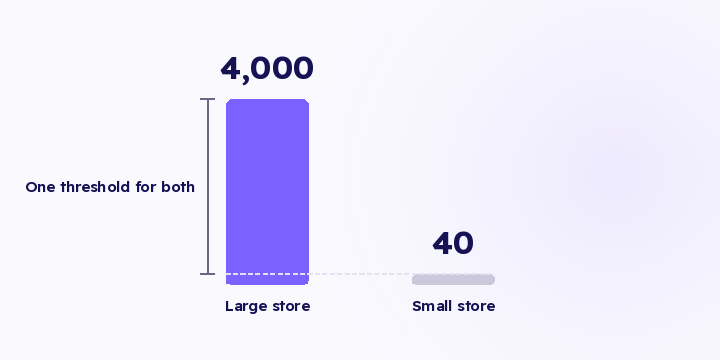
Alert me if events drop below 100 a day is a rule that works for one store, for about a month. A threshold that doesn't know your normal fires when you're fine and stays quiet when you're not.
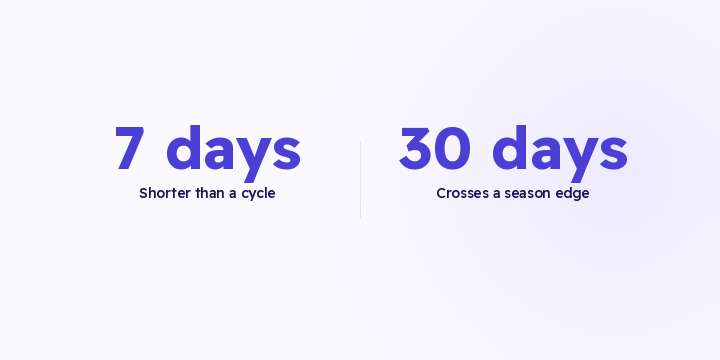
Last 7 days, last 30 days, this month. All three were chosen for convenience, not for a question. Here's how to pick the range from the question you actually have.