

Profit
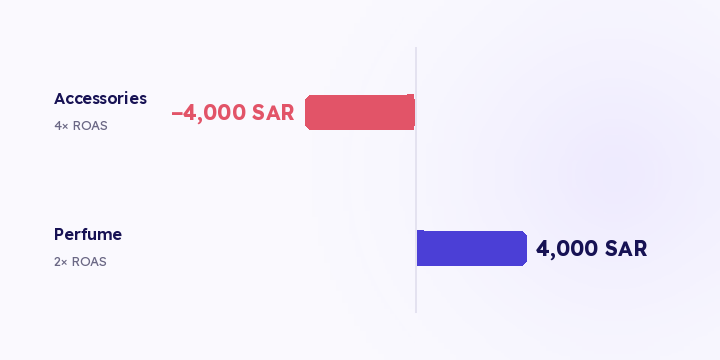
Why a campaign at 4× ROAS can lose money
ROAS counts sales, not profit. Once cost of goods, shipping and gateway fees are in, your campaign ranking changes. Here's the arithmetic and what to do about it.
3 min read
Most stores decide payment methods from the checkout side: what reduces friction and what shoppers expect. That's half the question. The other half is that each method carries different fees and a different basket size, and those two can pull in opposite directions.
| Gross | Gateway fee | Shipping | Net | |
|---|---|---|---|---|
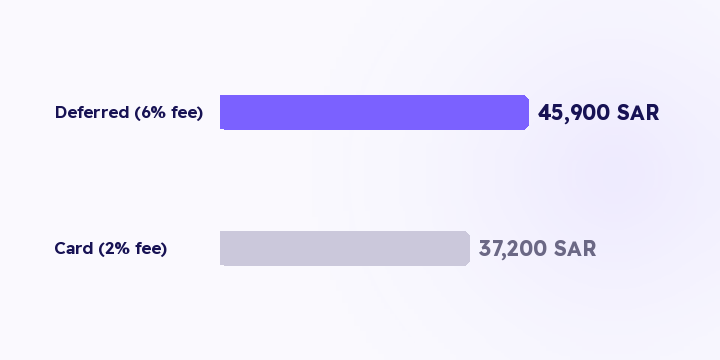
| Card | 100 × 400 = 40,000 | 2% = 800 | 5% = 2,000 | 37,200 SAR |
| Deferred payment | 100 × 540 = 54,000 | 6% = 3,240 | 9% = 4,860 | 45,900 SAR |
Illustrative figures.
Deferred payment carries three times the gateway fee of a card, and its net is still higher. The basket is 35% bigger, and that difference is larger than the fee difference.
Watch the shipping column while you're there. A bigger basket means more items and more weight, so shipping rises with it. Apply one store-wide shipping average and you'll credit deferred payment with a lower cost than it actually carries, and end up with an optimistic net.
That doesn't mean deferred payment wins in every store. It means fees alone can't answer the question. If basket size differs clearly between the two methods and you decide on fees, you'll reach the wrong conclusion.
Instalments change the question in the shopper's head. Instead of "can I pay 540 today" it becomes "can I pay 135 four times". That lifts the ceiling they'll buy under and makes them readier to add a second item.
The effect is real but it isn't universal. It shows clearly in higher-priced categories and weakens in cheap ones where the decision was easy anyway. That's why you run the calculation on your own orders instead of borrowing a percentage from someone else's case study.
There's a quick check that tells you whether the effect exists in your store: split last quarter's orders by payment method and compare average order value. If the two averages sit close together, the fee question gets simpler for you, and the cheaper method nets more.
Return rate. If one method comes with higher returns, the net above is optimistic for it. A bigger basket that comes back a week later doesn't add any profit. Check the rate per method before you conclude anything.
Attribution damage. Instalment providers redirect the shopper off-site, which breaks the session and pushes the order into direct. That's a measurement cost rather than a margin cost, and it makes the paid channels those buyers came from look weaker than they are. See every redirect that breaks a session.
Settlement timing. When the money actually reaches your account. It doesn't belong in the margin calculation, but it belongs in the decision if your cash flow is tight.
The result points to one of three decisions.
If the higher-fee method nets more, make it visible at checkout.
If it nets less, don't pull it straight away. Part of its orders won't switch to another method, they'll just leave. Change the display order first and watch how the shares move.
And if the difference between the two is small, leave it alone and put your attention on the return rate instead.
Steps one and two come out of your order data. Payment method, order value and source sit at order level in Flowfy, so you can export and split them. Storing gateway fees and shipping costs to report net margin per method automatically is on the roadmap and hasn't shipped. See ROAS versus true profit. Until it does, the calculation is manual.
Run the table once on last quarter's orders, and run it again whenever your gateway fees change or you start selling at a different price band.
ROAS counts sales, not profit. Once cost of goods, shipping and gateway fees are in, your campaign ranking changes. Here's the arithmetic and what to do about it.
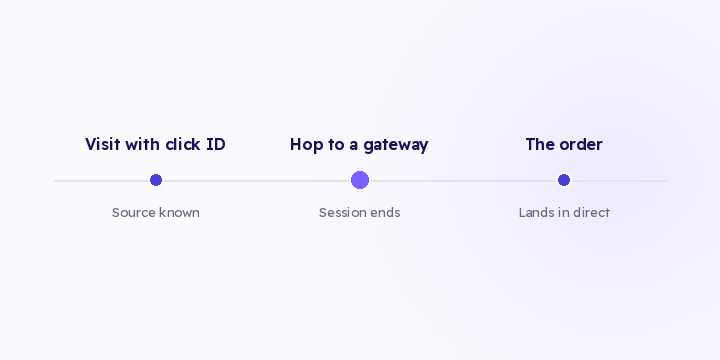
Instalment providers take the blame, but the mechanism is broader. Any journey that leaves your domain and comes back can end the session carrying the customer's source. Here's the list, and one fix that covers most of it.
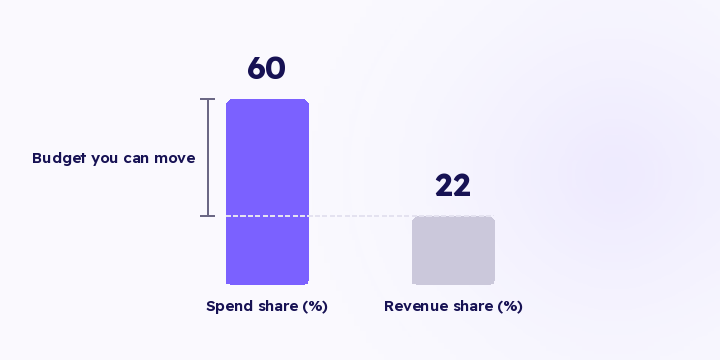
A new campaign costs creative, setup, a learning phase and budget. Moving money you already spend costs an afternoon. Here's the check that tells you how many riyals are sitting in the wrong place.