A channel dropped this week. Before you move its budget, there are four things to confirm, because ordinary variance and broken tracking draw the same line on a chart.
A channel is down 30% this week and you're ready to move its budget.
Reading direction rather than level is good advice, but it turns on you the moment you apply it to too few orders over too short a window. At that point you aren't following a trend, you're following ordinary variance. And once you start moving budget on it, you become one of its causes.
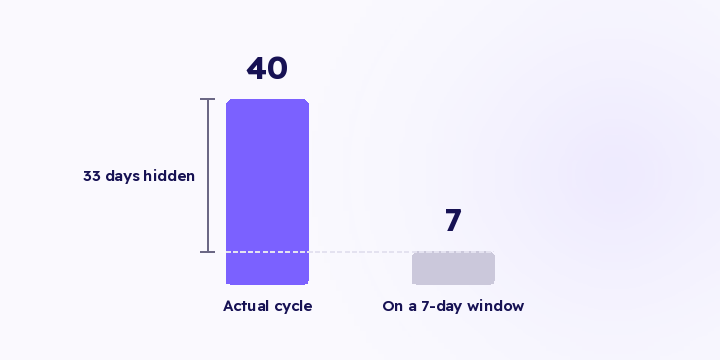
The shortest useful window is about three of your buying cycles. Below that, what you're reading is mostly campaign learning phases and day-of-week differences rather than performance.
If your customer takes ten days to decide, a one-week trend contains almost nothing but unfinished journeys. Work out your own cycle from buying cycle.
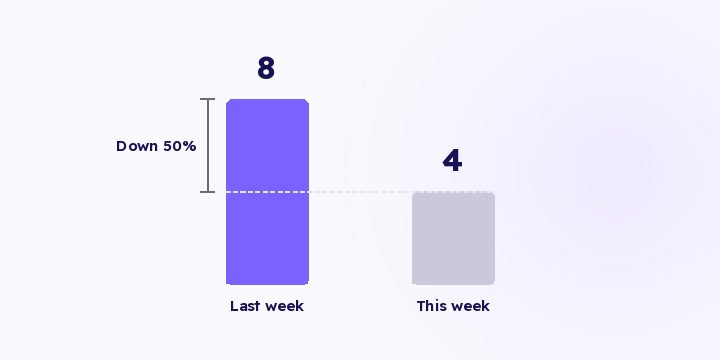
A channel producing eight orders a week will show large percentage swings from ordinary randomness. A 50% decline on eight orders is four orders, and four orders can be a quiet Tuesday.
The practical limit: if a handful of orders moves the percentage visibly, read that channel monthly instead of weekly. Small channels need a longer window, not more attention.
Both shapes produce the same percentage change and mean different things:
Shape
What it is
What to do
Gradual decline over weeks
A trend: creative fatigue, saturation, competition
Reallocate
Sharp drop on one date
A break: something changed or stopped
Investigate that date
A break has a cause with a date attached: a credential expired, a theme changed, a campaign was edited. Treat it as a trend and slowly reallocate, and you've spent weeks on a fault with a specific cause you could have fixed.
The check is to open the daily series instead of the weekly summary. A break is obvious in the daily view and disappears into an average. Flowfy shows attribution trends over stored journeys within a 90-day window at daily granularity, which is what makes the difference between the two shapes visible.
Before you conclude a channel is declining, confirm its events are still reaching the destination. A destination that went quiet and a channel that stopped working produce exactly the same line.
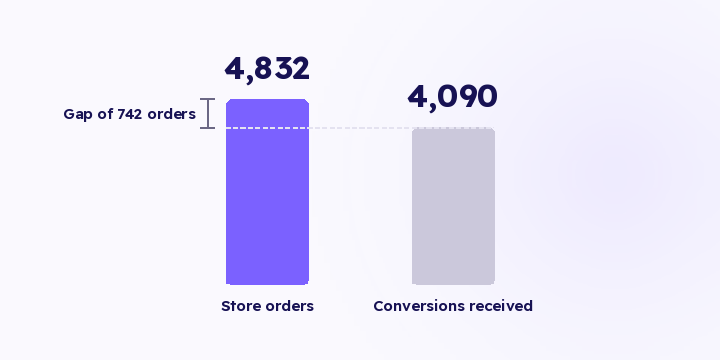
Open the delivered-events log and compare this week's event count against last week's. If events dropped while your store's order count held steady, the fault is in delivery, not in the channel.
This is the check people skip most and the one that costs the most. Move budget away from a channel whose tracking is broken and you lose the channel while the fault stays hidden. See tracking health.
One change per review. Move three things at once and the next trend won't tell you which move did what.
A fixed cadence. Weekly in an ordinary month, not whenever something looks off to you.
Write down what you expect before you change anything. Without a recorded prediction, every outcome finds an explanation after the fact.
Don't act on a trend you acted on last week. The budget you already moved hasn't produced its effect yet.
Trend revenue rather than ROAS. Revenue has one source of variance and ROAS has two. Joined ad spend inside Flowfy is on the roadmap and hasn't shipped, so ROAS today is something you assemble yourself from Flowfy revenue and spend from your ad accounts. Fixed alert thresholds misfire for the same reason, which is covered in why fixed thresholds fail.
Run the four checks in order before any budget move. If the trend survives all four, shift a small part of the spend and watch it for a full buying cycle before shifting more.
The gap between first touch and purchase is a fact about your product that no benchmark supplies. It sets your attribution window, when you start spending before a season, and how long you wait before judging a campaign.
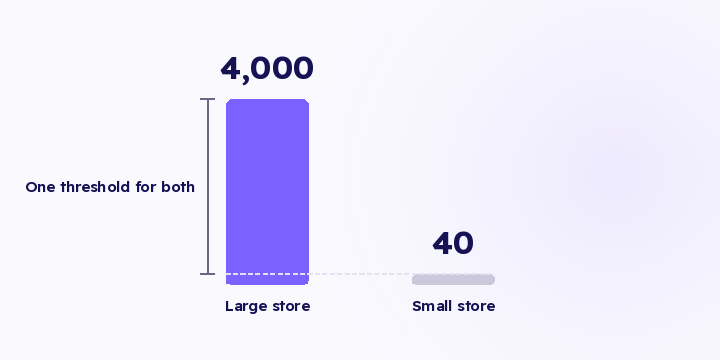
Alert me if events drop below 100 a day is a rule that works for one store, for about a month. A threshold that doesn't know your normal fires when you're fine and stays quiet when you're not.
Tracking rarely fails in a way you can see. A theme update or a lapsed permission, and the numbers drift down and read as a slow week. Here's what to compare, how often, and how to tell when a gap is worth acting on.