

Analytics
Finding the widest gap in your funnel
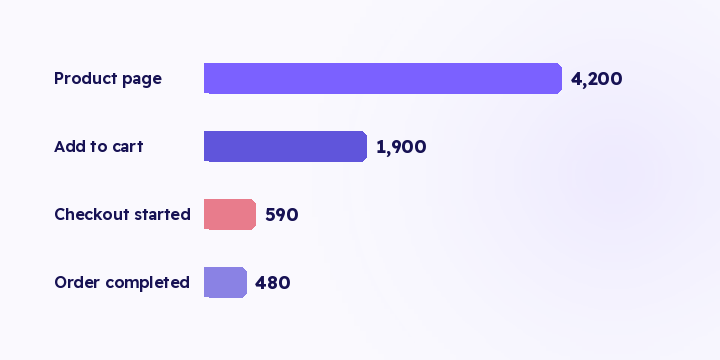
Most stores fix the step they have a ready number for, not the step losing them people. The rule is one line: compute the transition rate between each pair of steps and start at the lowest.
3 min read
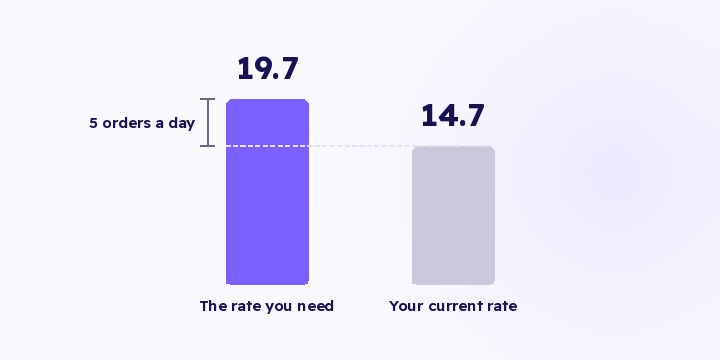
You have a monthly target. Few people look at it daily in the only form that supports a decision: how many orders a day from here to the end of the month.
The target is 500 orders. Eighteen days in, you have 264.
The difference between 14.7 and 19.7 is your plan for the next fortnight. Five orders a day, known now, with time left to act on it.
What you do about the gap depends on its size. If the required rate sits close to your current one, budget and the offers you already have will usually close it. If it sits well above, the decision is a different one: lower the target, restart a channel you'd paused, or bring forward an offer you were saving for month end. The value is choosing between those three in the middle of the month.
Recalculate daily rather than averaging. The required rate climbs with every day you spend below it. If it climbs three days running and your plan hasn't changed, the gap keeps widening.
You're 120 orders short with two days left. The required rate becomes 60 a day against a pace of 16. There isn't a budget, creative or discount that closes that gap at a price worth paying.
The target was known from day one and the maths is two lines. What was missing is that it wasn't in front of you every day.
Pace answers one question: are you on track. A second class of check answers a different one: is something quietly broken in the store itself rather than in tracking.
A product with high traffic and zero add-to-cart. Four hundred visitors this week and not one added it. Usually price, stock, imagery or a shipping message, and none of that shows up in your overall conversion rate.
A sudden drop in one funnel step. A checkout step converting at 31% falling to 12% overnight is a functional failure, not a market shift. More on that in funnel drop-off.
Someone notices both eventually. The difference is seeing them this week rather than next month.
An alert you defined yourself gets read, because you asked for it. An alert that arrives from a default setting gets skipped within a week.
A store that defines three alerts it genuinely cares about keeps reading them. A store that accepts twenty defaults mutes the channel within a fortnight, and every detector behind it stops being useful at that moment. Start with three, and add a fourth once one of the three has earned its place.
The inputs for the pace calculation are live in Flowfy today: revenue by source, order counts, funnel drop-off and customer segments. Goal tracking with a computed daily rate, behaviour detectors and self-defined alerts are on the roadmap and haven't shipped. Until they do, the calculation is two spreadsheet lines: orders so far ÷ days elapsed, and orders remaining ÷ days left.
Set the target from the same period last year adjusted for planned spend, not from last month, since last month hands you its own seasonality. Track orders rather than revenue for pace, because average order value moves on you.
Most stores fix the step they have a ready number for, not the step losing them people. The rule is one line: compute the transition rate between each pair of steps and start at the lowest.
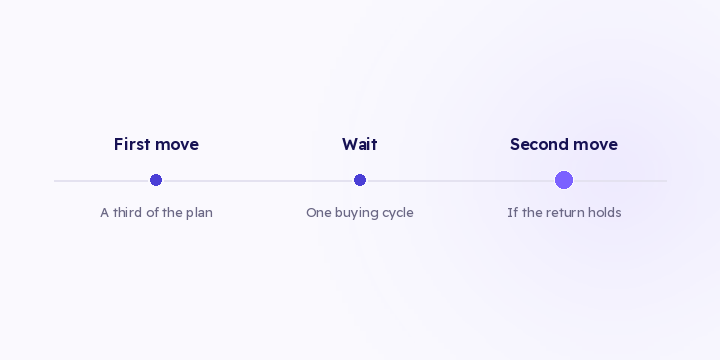
The distribution check tells you there's an opportunity. Moving it all at once eats most of it. Here are three execution rules, and what to watch afterwards.
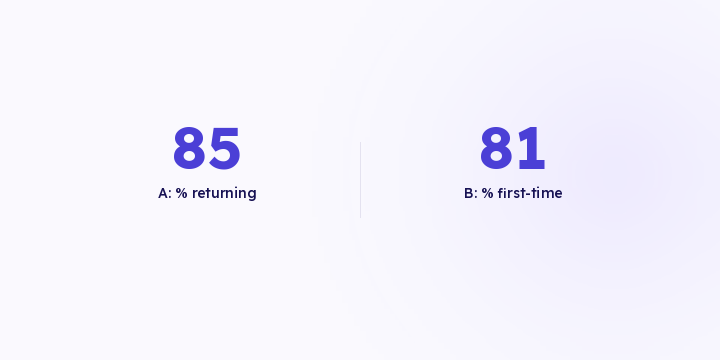
Two products with the same revenue can need opposite budgets. One buys you new customers, the other is why they come back. Revenue alone doesn't tell them apart.