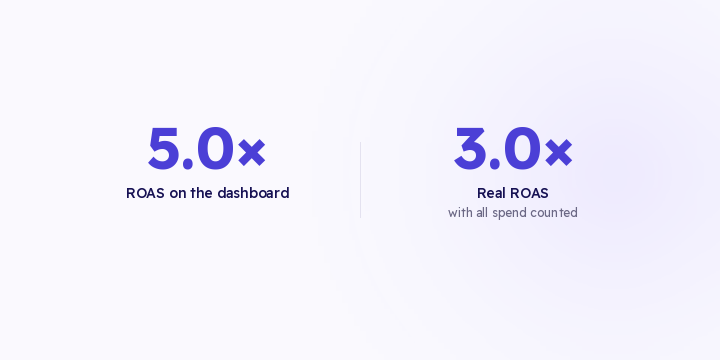
A 5.0 ROAS on the dashboard is worth checking before you celebrate. If 40% of your spend never matched a campaign, the denominator is short and the number is wrong in the direction you like.
Revenue lives in your store, spend lives in the ad platforms, and return comes out of the join between them. That join is exactly where most reported ROAS figures go wrong.
Monthly spend is 100,000 SAR across four campaigns. Matching on UTM alone, 60,000 SAR joins to known campaigns and 40,000 SAR lands in an unknown bucket, because links were tagged with different names or not tagged at all.
Recorded revenue is 300,000 SAR.
300,000 ÷ 60,000 = 5.0×, a lovely number and a wrong one, because the denominator is 40% short
With the 40,000 restored: 300,000 ÷ 100,000 = 3.0×
The decisions you built on 5.0, raising budget, widening audiences, cutting another channel, were all taken against spend that never entered the calculation.
Pull total spend from each platform for one closed month and compare it against the spend you can match to known campaigns. The difference is the bucket, and that figure alone tells you how wrong your current ROAS is before you fix anything.
A UTM is a string somebody typed, and that's the whole problem:
Names drift.summer, summer_2027 and Summer are three campaigns to a matcher and one campaign to a human.
Links get built without tags. Especially in-platform ad creation, where the destination URL is set by whoever built the ad.
Redirects strip them. A payment redirect or a link shortener can drop query parameters entirely.
Nothing enforces them. No system rejects an untagged link, so there's no moment where the mistake surfaces.
The click identifier solves this. Every platform stamps its own identifier on the click, such as fbclid, gclid and ttclid. It arrives in the URL, and the platform itself can tell you which campaign it belongs to.
Join key
Created by
Fails when
UTM string
A person
Naming drifts, or someone forgets to tag
Click ID
The ad platform
A redirect strips it, or the browser blocks capture
Capturing the click identifier server-side, at the order, is what makes that second row robust. It's the same mechanism that keeps a source through a payment redirect.
Spend isn't one report among many. It's the denominator, so an error in it spreads into every efficiency figure you have:
ROAS, the headline number, wrong in the direction you like
Cost per order and cost per new customer
Budget-fit analysis, which compares spend share against revenue share
Profit per channel, which subtracts costs from a return that was already overstated
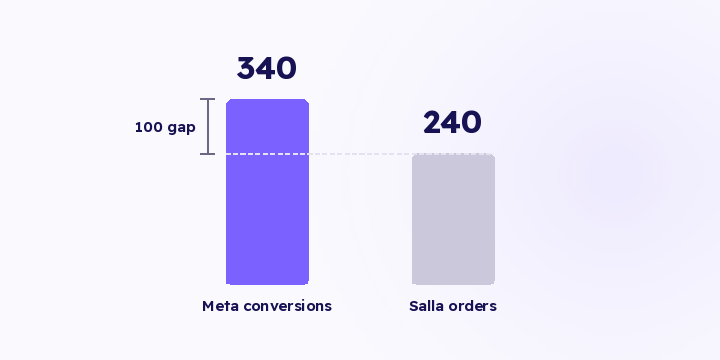
The platform's own ROAS doesn't solve this either, because it uses its own conversion count over its own window: why Meta reports more conversions.
In Flowfy, click identifiers are captured server-side and stored on the order, and orders carry their channel, campaign, ad set and ad, which is the prerequisite for any reliable join. Ad spend connectors, meaning daily spend pulled from Meta, Google, TikTok and Snapchat and joined on the click identifier, haven't shipped and are on the roadmap. Until they do, revenue by source is available in Flowfy, the spend figure comes from your ad accounts, and you join them in a spreadsheet. The arithmetic above works today, but it takes a manual step.
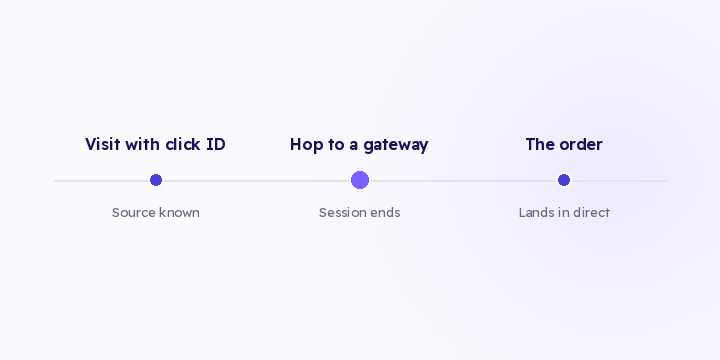
Instalment providers take the blame, but the mechanism is broader. Any journey that leaves your domain and comes back can end the session carrying the customer's source. Here's the list, and one fix that covers most of it.
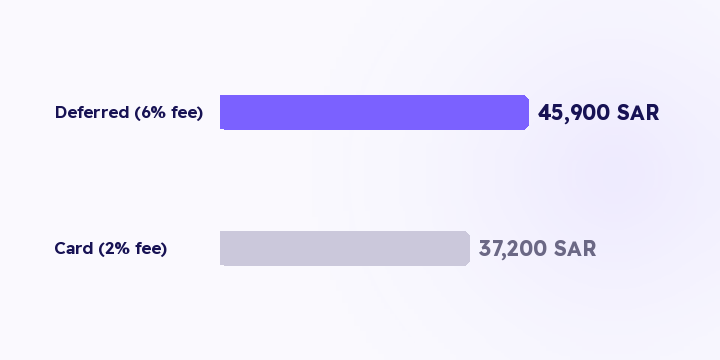
Deferred payment carries higher fees and a bigger basket. Which of those wins is an arithmetic question, and most stores answer it with an opinion. Here's the maths on a hundred orders, and six steps to run it on your data.